Top Breakthroughs Transforming the Metal Foundry Industry
Wiki Article
Everything About Metal Casting: Just How Foundries Provide High Quality and Precision in Production
Metal casting stands as a fundamental procedure in manufacturing, where raw steels are transformed right into specific parts. Foundries employ different casting methods to accomplish wanted characteristics and shapes. Each strategy comes with its own collection of advantages and constraints. Comprehending these nuances is vital for valuing how top quality and precision are kept throughout the procedure. The conversation ahead will certainly explore the intricate dynamics of metal casting and its relevance across multiple sectors.The Essentials of Metal Casting
Metal casting is an essential process in making that involves shaping molten metal into preferred types. This crucial technique starts with the choice of raw materials, usually different metal alloys, which are melted in a heating system. When the metal gets to the appropriate temperature level, it ends up being ready and liquid for casting.The procedure needs a mold, generally made from sand, metal, or ceramic, which defines the last form of the cast object. As soon as the molten metal is poured into the mold, it strengthens and cools down, handling the mold and mildew's contours.
After cooling down, the casting is removed from the mold and mildew, and any necessary completing procedures, such as brightening or cutting, are performed. This technique allows makers to create intricate shapes and elements with high precision and marginal waste. Metal casting is widely utilized across numerous sectors, from automotive to aerospace, highlighting its value in modern production.
Kinds Of Casting Techniques
While numerous casting methods exist, each strategy is and provides one-of-a-kind benefits fit for various applications. Sand casting, one of one of the most typical methods, utilizes sand as the mold material, enabling complex styles and big parts. Financial investment casting, known for its precision, uses a wax pattern covered in ceramic, making it ideal for complicated geometries. Die casting, which includes requiring molten metal into molds under high stress, is often made use of for mass manufacturing of little, detailed parts. In addition, shell molding integrates sand and resin to create thinner, much more accurate molds, improving surface coating. An additional approach, continuous casting, allows the production of long lengths of metal forms, simplifying production procedures. Each of these approaches plays an essential role in the metal casting sector, addressing details requirements from production quantity to design intricacy, consequently adding to the variety of applications across different sectors.The Function of Foundries in Manufacturing
Foundries offer a necessary feature in the production landscape, as they transform raw metals into functional components through various casting procedures. These facilities utilize a series of techniques to create items that fulfill specific specs, thereby making certain quality and performance in manufacturing (Aluminum Casting). By utilizing methods such as sand casting, financial investment casting, and die casting, shops cater to diverse markets, consisting of vehicle, aerospace, and building and construction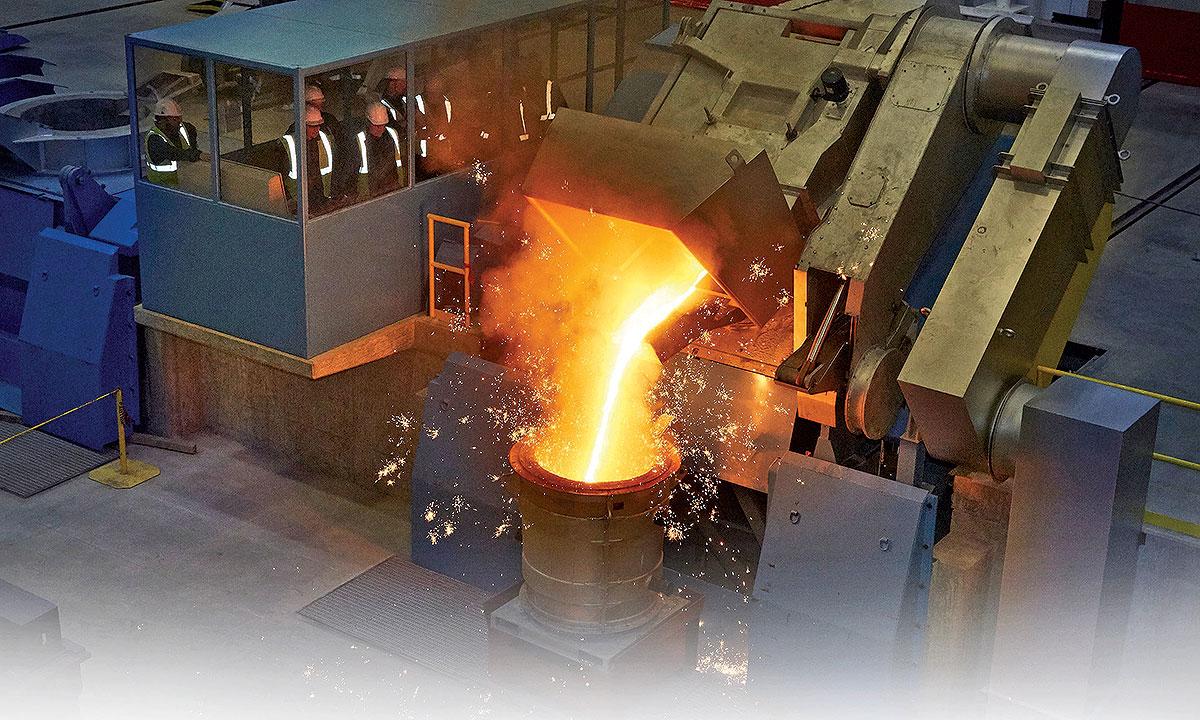
Inevitably, foundries are integral to the manufacturing environment, offering crucial parts that support a wide array of applications and industries. Their precision and versatility drive effectiveness in modern production.
Products Utilized in Metal Casting
The choice of products used in metal casting is necessary for accomplishing the wanted homes and performance of the end product. Different steels such as aluminum, bronze, and iron are commonly employed, each offering unique benefits. Aluminum is preferred for its light-weight and corrosion-resistant top qualities, making it optimal for vehicle and aerospace applications. Iron, specifically cast iron, is recognized for its outstanding fluidity and toughness, suitable for heavy equipment and infrastructure parts. Bronze, with its remarkable wear resistance, is commonly used in marine environments.In addition, products such as silica sand are often utilized for mold making, giving a great balance between durability and simplicity of shaping. The choice of materials also includes ingredients like fluxes, which enhance the casting procedure by enhancing fluidity and lowering oxidation. Eventually, the appropriate choice of these materials substantially affects the efficiency and high quality of the casting procedure.
Quality assurance in the Casting Refine
Quality control in the casting process is important to assure that end products fulfill market requirements and requirements. Numerous inspection methods are used to identify issues and examine the honesty of actors elements. Additionally, adherence to developed criteria and qualifications enhances the integrity and efficiency of actors materials.Examination Techniques Employed
Keeping the honesty of cast metal components relies heavily on different inspection techniques. Foundries use visual examinations as an initial procedure to recognize surface area problems, such as splits or inclusions. Non-destructive testing (NDT) approaches, consisting of ultrasonic testing and radiographic evaluation, are essential for detecting internal problems without jeopardizing the element's integrity. Dimensional examinations utilizing calipers and coordinate measuring devices validate that elements satisfy defined tolerances. In addition, chemical analysis validates that the alloy composition aligns with needed criteria. These evaluation methods jointly validate that the spreadings satisfy the necessary high quality and performance standards, eventually reducing the risk of failure in their desired applications. Implementing these rigorous assessments is essential for preserving high criteria in metal casting manufacturing.Requirements and Certifications
Criteria and accreditations play a vital function in the high quality control of the casting process. Foundries stick to various worldwide and industry-specific criteria, such as ISO 9001 and ASTM guidelines, assuring uniformity and dependability in their items. These requirements describe the required criteria for materials, production methods, and testing treatments, contributing to a more effective production process. Qualifications, such as AS9100 for aerospace applications, additionally emphasize the relevance of quality control in specialized fields. By getting these qualifications, foundries demonstrate their dedication to excellence, minimizing defects and improving customer fulfillment. Regular audits and examinations verify compliance, fostering continuous renovation and development within the industry. Eventually, adherence to developed requirements cultivates trust fund between clients and producers.Advancements in Casting Technology

3D Printing Combination
Incorporating 3D printing modern technology right into metal casting processes is changing the manufacturing landscape. This ingenious fusion improves the style and manufacturing of complex geometries that conventional techniques battle to accomplish. By employing additive production for producing cores and molds, shops can substantially decrease lead times and material waste. 3D printing allows for rapid prototyping, enabling manufacturers to evaluate layouts swiftly and efficiently, therefore promoting repetitive renovations. This modern technology likewise supports the production of light-weight parts, which are vital in industries such as aerospace and automotive. Therefore, the combination of 3D printing not just simplifies operations yet also elevates the precision and high quality of cast metal products, noting a notable improvement in the industry.Automated Production Processes
The improvements in 3D printing have paved the way for more innovations in automated manufacturing procedures within metal casting. Foundries are increasingly adopting robotics and automation to enhance effectiveness and precision. Automated systems improve the whole casting operations, from mold creation to pouring and completing. Smart sensors and real-time tracking enable specific control of temperatures and material circulation, lowering waste and boosting quality. Additionally, software remedies help with better design and simulation, making it possible for makers to maximize procedures prior to manufacturing begins. These automatic manufacturing procedures not only reduce labor costs however also lessen human mistake, ensuring regular result. Therefore, the combination of innovative innovations in metal casting is reinventing production capacities and fulfilling the expanding demands of various markets.Advanced Material Growth
As markets require higher efficiency and sustainability, developments in product development for metal casting are becoming a critical focus. Designers and researchers are discovering new alloys and composites that enhance mechanical buildings while reducing ecological effect. Technologies consist of lightweight products that keep strength, making it possible for better gas efficiency in transportation applications. In addition, the consolidation of recycled materials is ending up being more prevalent, lining up with sustainability objectives. Advanced casting strategies, such as 3D printing and precision molding, enable the development of intricate geometries that typical techniques can not accomplish. These developments not only improve the performance of cast elements however additionally enhance manufacturing performance. Overall, the continuous evolution of material science drives the future of metal casting, satisfying the needs of modern industries.
Applications of Metal Casting Across Industries
Metal casting plays a necessary duty in numerous sectors, as it permits the manufacturing of complicated shapes and premium elements with family member efficiency - Metal Foundry. In the automobile sector, cast here metals are essential for developing engine blocks, transmission instances, and various other crucial parts that need resilience and precision. Aerospace sectors make use of metal casting for elements like wind turbine blades and structural elements, where integrity is extremely importantFurthermore, machinery and tools manufacturing benefit from metal casting by producing equipments, housings, and other detailed components that enhance performance. The building and construction sector likewise employs metal casting for building features, architectural supports, and installations, showcasing adaptability.
Additionally, the medical area relies upon cast steels for surgical tools and implants, stressing the need for biocompatibility. Generally, metal casting is a fundamental procedure across multiple markets, giving solutions that fulfill stringent high quality criteria and performance needs.
Regularly Asked Concerns
What Precaution Are Absorbed Metal Casting Foundries?
In metal casting factories, precaution consist of safety gear, ventilation systems, routine equipment maintenance, employee training, and emergency situation protocols to alleviate threats connected with heats, harmful products, and possible accidents throughout the casting procedure.Exactly How Do Foundries Manage Waste and Environmental Influence?
Foundries manage waste and environmental effect via reusing products, executing filtering systems for exhausts, and sticking to regulations - Aluminum Foundry. They likewise embrace sustainable methods, such as minimizing power intake and making use of environmentally friendly compounds in their processesWhat Are the Costs Related To Metal Casting Processes?
The expenses connected with metal casting processes include basic materials, labor, equipment maintenance, power usage, and waste administration. Furthermore, changes in market value and compliance with environmental guidelines can substantially impact overall expenses for foundries.Just How Does Metal Casting Contrast to Various Other Manufacturing Approaches?
Metal casting uses unique advantages, such as complicated shapes and high product efficiency, compared to methods like machining or stamping. However, it might include longer lead times and greater initial prices, depending on project requirements.
What Occupation Opportunities Exist in the Metal Casting Industry?
The metal casting market offers numerous job possibilities, including foundry monitoring, process design, quality control, mold style, and maker procedure. Experts can likewise pursue duties in research and advancement, sales, and ecological health and wellness.Metal casting stands as a foundational process in production, where raw steels are transformed into certain parts. Metal casting is an essential process in making that involves shaping molten metal right into wanted forms. Another technique, continual casting, enables the production of long lengths of metal forms, streamlining manufacturing processes. The expenses linked with metal casting procedures consist of raw products, labor, equipment upkeep, energy consumption, and waste administration. The metal casting market supplies numerous career chances, consisting of foundry management, process engineering, top quality guarantee, mold and mildew style, and equipment procedure.
Report this wiki page